Naturalist Notes

Learn about flora and fauna in Marin County parks and preserves

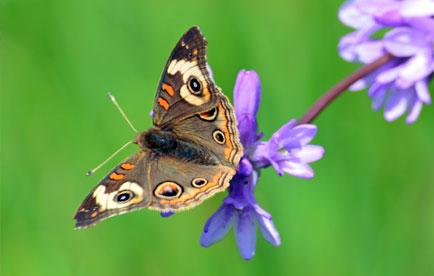
Buckeye Butterfly

When the buckeye's wings are closed, it can be easily overlooked, but the open wings have colorful markings and bold eye spots. These eyespots attract would-be predators to the hind wings, allowing the butterfly to escape with a bite out of the wing but a body intact. This common species ranges in open areas such as fields, parks, pastures, meadows, and coastal dunes where the black and orange caterpillars can be found feeding on sticky monkey flower. Scientific name: Junonia coenia.
View iNaturalist observations.

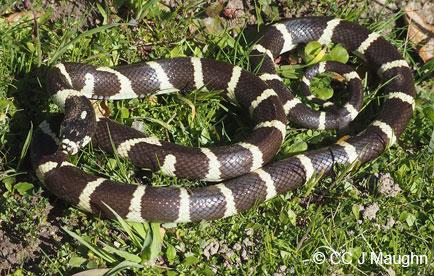
California Kingsnake

The California kingsnake is known for preying on rattlesnakes, and just the odor of a kingsnake is enough to elicit a defensive posture in rattlesnakes. However, kingsnakes eat a wide range of prey including mammals, birds, amphibians, and other reptiles which allows them to take advantage of many different habitats. In dappled light or shaded vegetation their black and white disruptive coloration helps them blend in with their surroundings and avoid being preyed upon themselves. Scientific name: Lampropeltis californiae.

View iNaturalist observations.

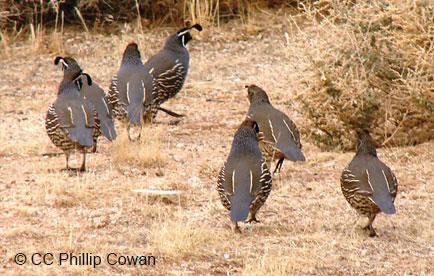
California Quail

Due to a diet high in seeds, California quails wait until many plants have gone to seed before laying eggs; this makes them one of the latest breeding birds in Marin. Young hatch late spring through summer, are born covered in down, and are able to run immediately and follow their parents to food sources. Males guard their mate and offspring during the breeding season, then neighboring families come together to form large flocks in the fall and winter, when multiple males take turns acting as sentries. Scientific name: Callipepla californica

View iNaturalist observations.

California Brown Pelican

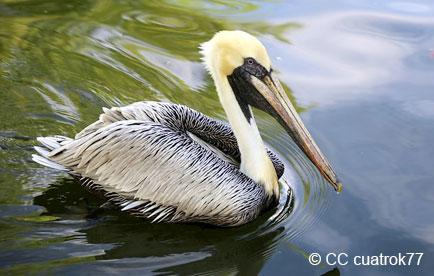
With seven-foot wingspans and giant bills, brown pelicans (Pelecanus occidentalis californicus) are hard to miss as they soar over bodies of salt water. Spotting fish, they can dive at speeds of up to 45 miles an hour, plunging head first, filling their gullets with up to three gallons of water and catch. Removed from the endangered species list in 2009 after decades of restoration efforts, as many as 20,000 individuals spend the summer in the golden state. Before winter, most will head back to warmer southern breeding grounds. Scientific name:  Pelecanus occidentalis californicus.

View iNaturalist observations.

California Buckeye

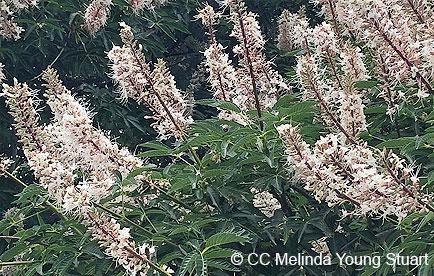
Also called the California horse-chestnut, this multi-trunked deciduous tree can live as long as 300 years. Aesculus californica has adapted well to summer dry conditions, thriving from the central coast to the Sierra Nevada foothills. Striking white flower spikes appear in spring. The show continues when they go to seed–the largest seeds of any non-tropical plant species. But take care, because bark, leaves, fruits, and seeds contain a neurotoxic chemical Scientific name: Aesculus californica.

View iNaturalist observations.

California Quail

Due to a diet high in seeds, California quails wait until many plants have gone to seed before laying eggs; this makes them one of the latest breeding birds in Marin. Young hatch late spring through summer, are born covered in down, and are able to run immediately and follow their parents to food sources. Males guard their mate and offspring during the breeding season, then neighboring families come together to form large flocks in the fall and winter, when multiple males take turns acting as sentries. Scientific name: Callipepla californica

View iNaturalist observations.

Common Ringlet

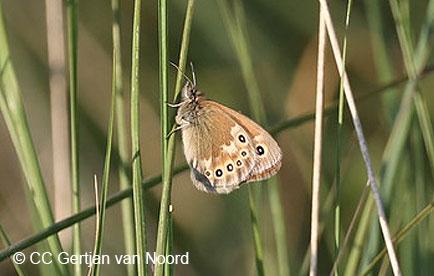
This small butterfly is on the wing through August. A weak flyer, they can be spotted fluttering amidst grasslands which host the hungry caterpillars. The spring brood is silvery white, with a darker hindwing which scientists believe aids thermoregulation and camouflage among lush green grass. The color of the second brood is light beige, perfectly matching the dry grass of summer. Scientific name: Coenonympha tullia

View iNaturalist observations.

Dragonflies

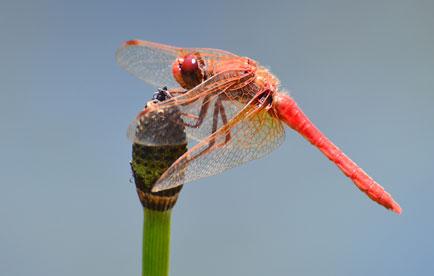
Colorful adult dragonflies grace freshwater ponds and wetlands in summer. Some prefer still water; others like running streams. Look for long, bright blue, green, or orange bodies and delicate wings. Males do acrobatic maneuvers, patrolling back and forth in search of females, who visit ponds, lakes, and streams to lay eggs. Some species of these insects migrate long distances, and can reach speeds of up to 30 miles an hour in flight. Others are homebodies and travel more slowly. Their favorite summer snack is mosquitoes.

View iNaturalist observations.

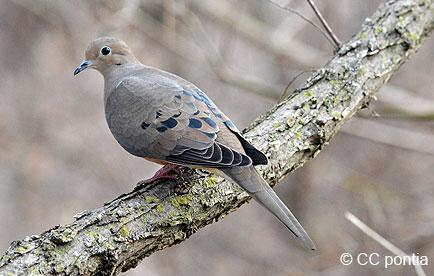
Mourning Dove

Listen for the soft, haunting call of a mourning dove in morning or evening. They are one of the most abundant and widespread bird species on the continent, living comfortably in close proximity to humans. Mourning doves even build their loosely woven nests and raise their young on house gutters, eaves, or windowsills. Males choose favorite cooing perches; regularly advertising territory with their calls. They feed in open ground, preferring seeds, and are easy to attract to a backyard with grains like millet. Scientific name: Zenaida macroura.

View iNaturalist observations.

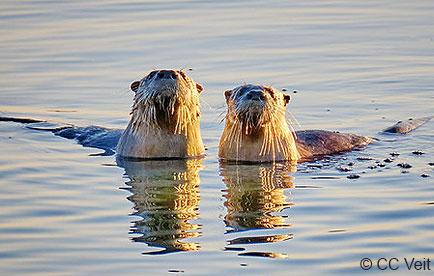
North American River Otter

Otters have two layers of fur – the thickest coats in the animal kingdom – to keep them warm and buoyant. At home in water or on land, they have webbed feet and sleek tails for swimming as well as strong legs and sleek bellies for running and sliding. They can jog as fast as 15 miles per hour! Creekside dens often have an underwater entrance, helping to protect them from predators. Otters are known for playful antics and a variety of vocalizations from chuckles to chirps to growls. Due to conservation efforts and habitat improvements North American river otter populations have recently rebounded and they are once again found in many parts of the Bay Area. Scientific name: Lontra canadensis.

View iNaturalist observations.

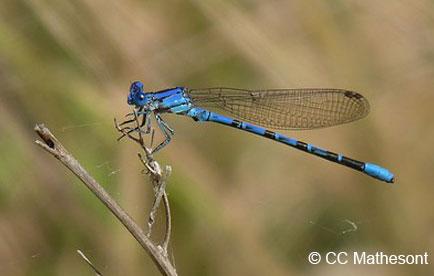
Vivid Dancer

Closely related to dragonflies, damselflies are small and delicate, typically perching with wings folded over their bodies rather than spread to the sides. A common species, the vivid dancer, is spectacularly vibrant blue and gives a characteristic flick of the wings when it lands. Agile predators, they can be spotted hovering and plucking insects from streamside vegetation. Eggs are laid in streams where the larvae prey on other aquatic invertebrates. Scientific name: Argia vivida.

View iNaturalist observations.

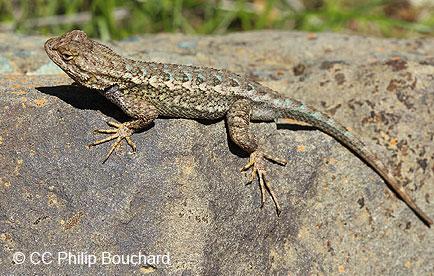
Western Fence Lizard

Also called blue-bellies, these common lizards grow up to 8 inches long, nose to tip of tail. Males show off by doing pushups, exposing bright blue undersides. They are at home in backyard gardens, sunning on paths, rocks, and fence posts, while snacking on insects and spiders. To regulate body heat, each individual can change color from light gray to near black in order to reflect or absorb sunlight. A fence lizard can live for several years, brumating through the winter. The species are abundant because each female can lay up to three clutches of eggs each year, so watch out for the baby lizards along trails during the warm, dry season. Scientific name: Sceloporus occidentalis.

View iNaturalist observations.